New publication from the MEMBRAMICS lab in Current Biology
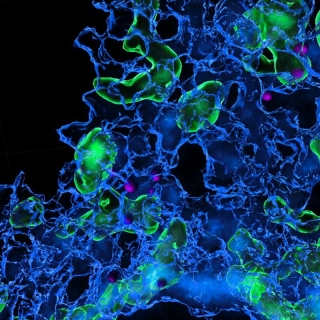
Mitochondria-ER-lipid droplet crosstalk regulates metabolic adaptation to shear stress via VMP1
Current Biology – October 19, 2026
The MEMBRANICS team, headed by Etienne Morel, reports a new metabolic adaptation in response to shear stress in kidney epithelial cells (KECs). In this study, published in Current Biology, the lab investigates the formation of endoplasmic reticulum (ER) – lipid droplet (LD) – mitochondria contact sites in response to shear stress and the role of VMP1 in fatty-acid (FA) transfer from LD to mitochondria.
Kidney tubular epithelial cells are exposed to physiological shear stress from the onset of urinary filtration, making mechanical cues essential for their differentiation, metabolic programming, and long-term function. While shear stress has long been recognized as a determinant of epithelial polarity and signalling, how it acutely reshapes intracellular membrane organization to support metabolic adaptation has remained poorly understood.
Using a combination of transmission electron microscopy, 3D imaging analysis and TurboID coupled with mass-spectrometry, this work demonstrates that physiological shear stress drives transient mitochondrial membrane remodelling as well as an increase of mitochondria-ER contact sites (MERCs). This shear stress also drives LD proximity to MERCs and increases of the VMP1 protein proximity to MERCs; VMP1 is required for FA transfer to mitochondria and metabolic adaptation in shear stress conditions.
These findings offer a new model of KECs in response to shear stress: ER-LD-mitochondria contact sites are dynamic platforms that coordinate lipid transfer and mitochondrial remodelling during the early adaptation of KECs to physiological shear stress, highlighting membrane contact sites as important components of the cellular response to mechanical forces.