
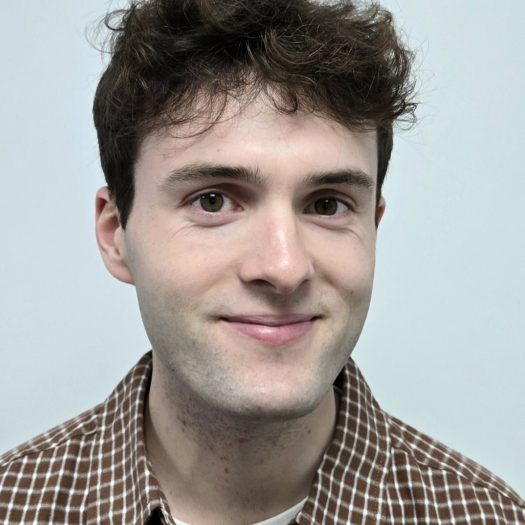
Meryem Baghdadi distinguée au Palmarès des Inventeurs 2025

Félicitations à Meryem Baghdadi. Lauréate du Palmarès des inventeurs 2025 Le Point, Meryem fait partie des 100 scientifiques distingués pour l’impact de leurs recherches. Une belle reconnaissance de son parcours et de son engagement dans la recherche fondamentale !
Bravo à tous les lauréats !

Olivier Tabary

Olivier Tabary has been a researcher at Inserm at Inem since 2025. He began focusing on cystic fibrosis projects in 1996. Following his PhD in Reims and a post-doctoral fellowship at EMBL in Heidelberg, Germany, he spent a significant period at St Antoine Research Hospital in Paris. Throughout his career, he has advanced various techniques in microscopy, molecular and cell therapy, infection, and inflammation, consistently related to CF patient needs. In 2023, Dr. Tabary founded the startup Anoat Therapeutics to create a novel therapeutic approach for patients.
Jacky Goetz

Jacky Goetz graduated in Pharmacology and Cell Biology from University of Strasbourg (France) in the laboratory of K.TAKEDA. He then moved to the laboratory of I.R. NABI in Montreal (University of Montreal, Canada), and later in Vancouver (University of British Columbia, Canada), where he obtained his PhD in 2007. He performed two postdoctoral stays, one at the CNIC in Madrid (Spain) in the laboratory of M.A. DEL POZO, and one in the lab of J.VERMOT at the IGBMC in Strasbourg (France).
Aurélien Roux

Aurélien Roux studied biology at the Ecole Normale Supérieure de Lyon, France (1997-1999), with a minor in Physics. He did a Master of Physics, University Denis Diderot, Paris (1999-2000). As a Ph.D student with Patricia Bassereau and Bruno Goud (Curie Institute, Paris, 2000-2004), he studied how lipids can be sorted by membrane curvature. He then did his post-doctoral work with Pietro de Camilli (2004-2007, Yale, USA), reconstituting in vitro dynamin mediated membrane fission, which he continued as a CNRS staff scientist (Institut Curie, Paris, 2007-2010).
La fatalité de la mucoviscidose sera-t-elle vaincue ?

Au-delà du labo - un nouveau livre, écrit par Aleksander Edelman et Isabelle Sermet-Gaudelus, chercheurs à l'INEM - Institut Necker Enfants Malades, avec la contribution de Georges Travert, retrace l’histoire de la mucoviscidose, une maladie génétique qui touche plus de 7 500 personnes en France.
Le réseau doctoral MENTOR recrute 18 doctorants

Le réseau doctoral MENTOR, coordonné par Mario Pende (INEM, Université Paris Cité), ouvre 18 postes de doctorants.
Financé par le programme MSCA-DN, MENTOR est un réseau de formation multidisciplinaire axé sur la signalisation mTOR, une voie clé régulant la croissance cellulaire et le métabolisme. La dérégulation de mTOR est impliquée dans le cancer, les maladies métaboliques et des maladies génétiques rares appelées mTORopathies.