Auto-immunity targeting type I interferons and risk of severe viral infections
Cell, May 2026
Researchers from the team led by Matthieu Mahévas and Pascal Chappert at Institut Necker Enfants Malades (Inserm/CNRS/Université Paris Cité/Université Paris-Est-Créteil), in collaboration with an international consortium including Jean-Laurent Casanova (Institut Imagine), Félix Rey (Institut Pasteur) and Guy Gorochov (CIMI), report new insights into the origin of autoantibodies targeting type I interferons. This large-scale collaborative study, involving over 60 researchers, is published in Cell.
Type I interferons are key proteins in antiviral immunity. However, a subset of patients with severe viral infections (including more than 10% of individuals with severe COVID-19) harbor autoantibodies that neutralize these molecules, impairing their antiviral defense. The origin of these autoantibodies has remained largely unclear.
By combining structural biology, protein interaction modelling and in-depth analysis of human B lymphocytes, the authors demonstrate that the immune cells producing these autoantibodies are not induced during infection but pre-exist in individuals prior to viral exposure. These autoreactive B cells display features reminiscent of those observed in genetic disorders affecting immune tolerance, and are capable of disrupting antiviral responses.
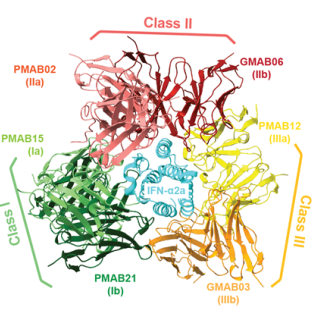
The study further provides a detailed molecular mapping of how these antibodies recognize type I interferons, based on the characterization of more than 150 antibodies. This work offers unprecedented insight into the diversity and specificity of this autoreactive response.
These findings suggest that, in otherwise healthy individuals, pre-existing defects in immune tolerance may predispose to severe viral infections. By identifying this hidden autoimmune state, the study opens new perspectives for risk stratification, early detection, and preventive strategies in infectious diseases.
🔗 Click here to access the article
🔗Click here to learn more about the team’s research
Image credits: article