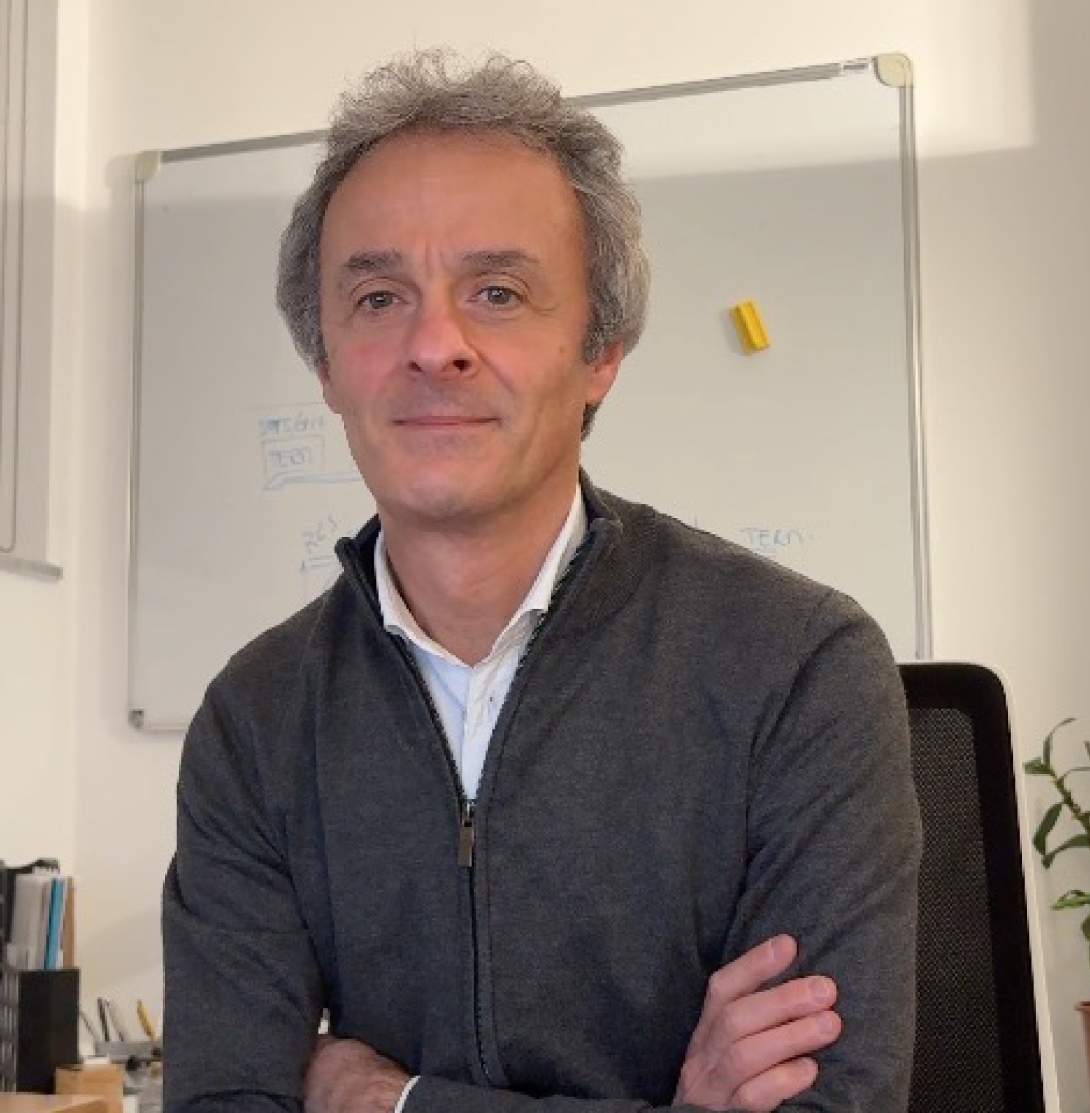
Gioacchino Natoli
Seminar topic: Control of genic and extragenic transcription in inflammation and cancer.
Gioacchino Natoli obtained his Medical Degree with honors from the University of Rome La Sapienza in 1991, with a thesis on the role of the Hepatitis B Virus X protein in hepatocellular carcinoma. He completed a residency in Internal Medicine at La Sapienza and pursued research training in molecular biology and gene regulation, including postdoctoral work at the University of California, San Diego, in the laboratory of Prof. Michael Karin.
In 2000, Dr. Natoli established his first independent research group at the Institute for Research in Biomedicine (IRB) in Bellinzona, Switzerland. He later served as Group Leader at the European Institute of Oncology (IEO) in Milan (2005–2016), Professor of Biochemistry at Humanitas University School of Medicine (2016–2019), and returned to IEO in 2020, where he currently leads a research group.
"Research in my lab is focused on molecular mechanisms of transcriptional and epigenetic regulation in three different areas. a) How cell type-specific transcriptional responses to inflammatory stimuli are mounted in immune cells and particularly macrophages, the key mediators of innate immunity. Among other findings, we showed that transcription factors driving and maintaining myeloid lineage differentiation specify the cell type-specific repertoire of genomic regions where transcription factors activated in response to environmental stimuli are recruited, thereby establishing the basis for tissue-specific, stimulus-induced gene expression. b) Mechanisms that control extragenic Pol II activity Following the serendipitous discovery in 2010 of enhancer RNAs in activated macrophages, we became strongly interested in mechanisms that control extragenic Pol II activity, which led us to identify the Restrictor complex, today a central focus of our research. c) The third and most recent research branch aims to understand the regulatory basis of the massive loss of lineage identity observed in pancreatic cancer, which underlies the extensive non-genetic heterogeneity characteristic of this tumor."
Mark your calendars and make sure to join!