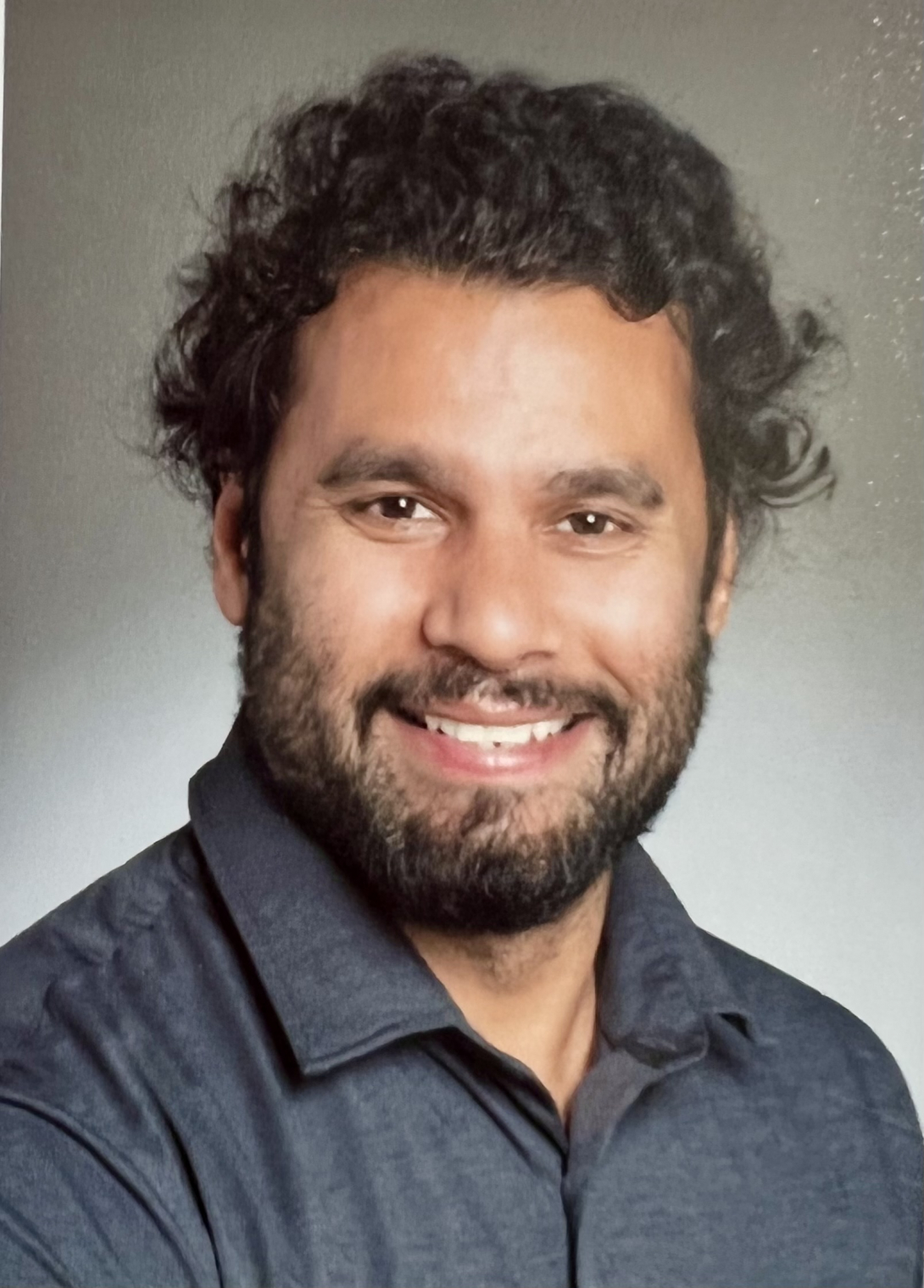
Manvendra Singh
Seminar topic: Recycled Viruses as Regulatory Hubs: Linking Early Human Development to Immune Responses in Blood and Brain
Dr. Manvendra Singh is a systems and computational biologist whose research focuses on how endogenous retroviruses and other mobile DNA elements rewire gene regulatory networks in human pregnancy, immunity and the nervous system. From 1st January 2026, he is to lead the “Systems Biology of Mobile DNA and Genome Regulation” group at the Institut Necker. At the same time, Dr Singh will be holding a CNRS Chaire de professor junior (CPJ) position at the University of Paris Cité. His lab is set to study systems biology using AI-driven single-cell methods to understand how viral genetic remnants (HERVs) influence development and disease, from brain disorders to immune dysregulation.
After his doctoral training at Max Delbrück Center for Molecular Medicine in Berlin, Dr Singh pursued Presidential postdoctoral and Senior Scientist positions at leading institutions, Cornell University, USA and the Max Planck Institute in Göttingen, where he developed and employed single-cell biology, computational and mathematical techniques overlaid with genetic and epigenetic functional experiments to understand the roles HERVs towards human physiology in health and diseases, Across these environments, he built a strong track record in dissecting locus-specific roles of HERVs in processes such as human embryogenesis, immune response and neurogenesis.
Dr. Singh has received several scientific awards, authored and co-authored publications in high-impact journals in genomics, neuroscience and psychiatry, and is centrally involved in international consortia on endogenous retroviruses and mobile DNA. His work is supported by national and international funding bodies, and he is actively developing a translational agenda to leverage Mobile DNA-based regulatory signatures as biomarkers and potential therapeutic entry points in inflammatory and neurodegenerative diseases.