Biosketch
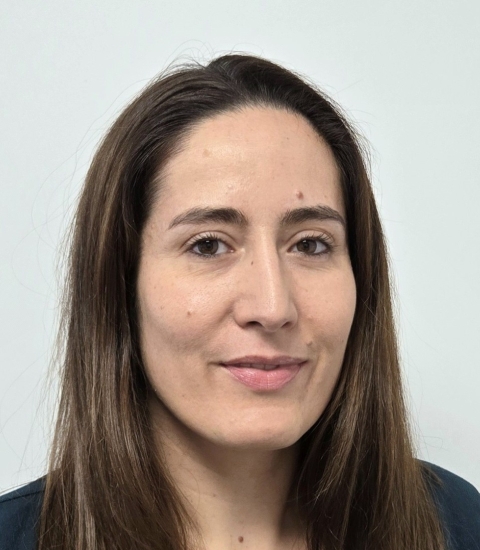
Estelle Balducci is a pharmacist-biologist and researcher in the “Normal and Pathological Lymphoid Differentiation” team at the Necker–Enfants Malades Institute and the Department of Hematology and Oncology at Necker–Enfants Malades Hospital, both led by Prof. Vahid Asnafi. She obtained her Master’s degree and PhD in 2017 from Aix-Marseille University, under the supervision of Prof. Dignat-George at the VRCM (Vascular Research Center of Marseille), where her research focused on the role of extracellular vesicles in intercellular communication through microRNA transfer. She subsequently completed her postdoctoral research at the INSERM UMR-S 935 unit, “Models of Malignant and Stem Cells,” in Villejuif, where she investigated the mechanisms underlying chronic myeloid leukemia progression using cell models derived from induced pluripotent stem cells (iPSCs). Her current research focuses on two main areas: the characterization of genetic and genomic alterations in hematological malignancies, particularly T-cell lymphoid malignancies, and the study of non-malignant somatic mosaicism. She has developed expertise in integrating genomic and cytogenetic technologies, including optical genome mapping (OGM) and Oxford Nanopore® long-read sequencing, to characterize complex structural genomic abnormalities. Her research aims to better understand the genomic mechanisms underlying hematological malignancies and non-malignant somatic mosaicism, and to identify novel diagnostic, prognostic, and therapeutic biomarkers.
Estelle Balducci est pharmacienne biologiste et chercheuse au sein de l’équipe " Différenciation lymphoïde normale et pathologique" de l’Institut Necker-Enfants Malades et du laboratoire d’onco-hématologie de l’Hôpital Necker–Enfants Malades, dirigés par le Pr Vahid Asnafi. Elle a obtenu son master puis sa thèse de sciences à l’Université d’Aix-Marseille en 2017, sous la direction du Pr Dignat-George au VRCM (Vascular Research Center of Marseille), consacrant ses travaux à l’étude du rôle des vésicules extracellulaires dans la communication intercellulaire via le transfert de microARN. Elle a ensuite réalisé son post-doctorat au sein de l’unité INSERM UMR-S 935 « Modèles de cellules malignes et de cellules souches » à Villejuif, où elle a étudié les mécanismes de progression de la leucémie myéloïde chronique à l’aide de modèles cellulaires dérivés de cellules souches pluripotentes induites (iPS). Ses activités de recherche actuelles s’articulent autour de deux axes principaux : la caractérisation des altérations génétiques et génomiques des hémopathies malignes, notamment des hémopathies lymphoïdes T et l’étude des mosaïcismes somatiques non cancéreux. Elle développe une expertise dans l’intégration de technologies de génomique et de cytogénétique, notamment la cartographie génomique optique (CGO) et le séquençage long-read Oxford Nanopore®, afin de caractériser les anomalies structurales complexes du génome. Ses travaux visent à mieux comprendre les mécanismes génomiques associés aux hémopathies malignes et aux mosaïcismes somatiques non cancéreux, et à identifier de nouveaux biomarqueurs diagnostiques, pronostiques et thérapeutiques.