New publication from Ganna Panasyuk’s team in Nature Cell Biology and interview with the first author
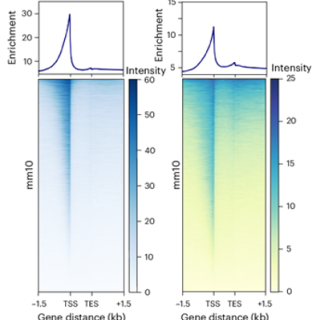
The Panasyuk team discovered an unexpected nuclear role for class 3 PI3K, linking nutrient availability to gene activation.
Fasting is a fundamental physiological state experienced by virtually all organisms, often for longer periods than the fed state. Successful adaptation requires close coordination between rapid cytosolic responses, which mobilize nutrients and activate autophagy, and transcriptional remodeling in the nucleus, which sustains longer-term metabolic programs. How cells connect these two levels of regulation has remained poorly understood.
In a study published in Nature Cell Biology, Ganna Panasyuk’s team at INEM shows that class 3 PI3K (PI3K-3), a conserved nutrient sensor best known for its cytosolic role in autophagy and trafficking to the lysosome, also acts on chromatin. Combining genomic, transcriptomic, proteomic and metabolomic approaches in cultured cells and mouse liver, the team found that nuclear PI3K-3 associates with active RNA polymerase II and acts as a co-activator of the epigenetic writer Setd1a/COMPASS complex, which deposits the activating H3K4me3 mark on chromatin. This supports transcription of nutrient-responsive genes, particularly the autophagy gene program, allowing PI3K-3 to coordinate autophagy at both cytosolic and transcriptional levels.
The team demonstrated that this nuclear function proved essential during nutrient deprivation. PI3K-3-deficient cells showed impaired induction of autophagy genes after amino-acid withdrawal. In mice lacking the essential PI3K-3 subunit, Vps15 protein, in the liver, only about 10% of the normal fasting-induced transcriptional response was preserved. Genes controlling gluconeogenesis, fatty-acid oxidation, ketogenesis and amino-acid metabolism failed to activate properly, leading to defective lipid utilization and ketone production. Strikingly, the study also reveals an unexpected link between PI3K-3 and nuclear SAM availability, suggesting that nutrient-derived methyl donors within the nucleus directly influence histone methylation and gene activation.
The Panasyuk laboratory is proud to have led this national and international collaborative effort with the Lutter, Margueron, Ozawa and Hnia laboratories. The study exemplifies the power of integrating cell biology, epigenetics, computational biology and metabolism to uncover fundamental mechanisms governing cellular adaptation to nutrient stress.
Click here to access the article
Interview with the first author: Nutrient Sensing Reaches the Genome
1. From cellular recycling to chromatin: what drew you to PI3K-3’s nuclear role, and where did that journey lead?
When I joined the Panasyuk laboratory, only a handful of studies, mainly in yeast, plants and worms, suggested that PI3K-3 might function in the nucleus. Because this enzyme is so highly conserved, it was exciting to ask whether nuclear roles had been retained in animal cells. The project immediately resonated with me: it combined a fundamental physiological question of how organisms adapt to feeding and fasting with the mechanistic depth needed to follow the answer across multiple biological layers. I am driven by mechanistic research, so it felt like my project from day one.
My first contribution was to our 2023 Nature Cell Biology study, which established functional crosstalk between nuclear PI3K-3 and the circadian clock. That finding convinced us to look more broadly at the core transcriptional machinery. In the present study, we found that PI3K-3 is functionally engaged on chromatin, where it associates with transcriptionally active RNA polymerase II and co-activates Setd1a/COMPASS, promoting H3K4me3 and nutrient-responsive transcription. Loss of Vps15 impaired autophagy gene induction in starved cells and largely blunted the fasting transcriptional program in mouse liver. The connection to nuclear SAM added another unexpected layer. Together, these findings show how one nutrient-sensing complex can coordinate rapid cytosolic adaptation with longer-term gene expression, while opening a broader field of nuclear PI3K-3 and PI3P signaling.
2. Your study crossed several scientific borders. What was the greatest challenge, and what made INEM the right environment to address it?
We began this work during the COVID-19 pandemic—a challenge, but also a blessing in disguise. With the support of our collaborators, I used that period to learn computational approaches and analyze genome-scale data. I began as a cell biologist and gradually became a data scientist as well, sharing these skills with my labmates.
Another challenge was building our epigenomic toolkit. I learned and implemented ChIP-seq and CUT&RUN to map epigenetic writers, histone marks and—most challenging of all—class 3 PI3K. We also developed dCas-MINI tools to target PI3K-3 to chromatin. I still remember the thrill of sending our first PI3K-3 ChIP-seq samples for sequencing. That first experiment did not work—but we did not give up. The eventual success made the result even more rewarding. As data accumulated, the story became larger than one paper. We had to choose which branches—physiology, molecular mechanisms or metabolism—we could pursue fully. Those decisions were difficult, but they also revealed how much remains to be discovered.
Bold science needs both ambition and resources. The ERC funding awarded to my mentor, Ganna Panasyuk, enabled us to create, test and validate these tools. INEM and the SFR Necker platforms provided an exceptional environment, and I want to mention Ivan Nemazanyy from the Metabolomics Platform - he was a tireless collaborator in developing metabolomics protocols for this project. Visits to partner laboratories in France, Germany and Japan transformed collaborations into personal relationships that I value. As I move on from the Panasyuk laboratory, I carry broader expertise and a lesson: be bold, perseverant, create opportunities and remain resourceful.
3. Now that nutrient sensing has reached the genome, where does the story go next?
In our laboratory, we often say that the best scientific stories leave more questions than answers. I am glad to say that this is one of them. As a team, we have been discussing the questions opened by this study, and two main priorities have emerged.
The first priority would be to establish the physiological significance of nuclear PI3K-3 in health and disease. It would be great to move beyond the fasting liver to examine its functions across different tissues, feeding–fasting cycles and human cells, as well as in conditions where nutrient sensing or transcriptional control is disrupted. This should reveal whether nuclear PI3K-3 is a broadly used adaptive mechanism or one that becomes particularly important in specific physiological and pathological contexts.
The second priority would be to understand the underlying molecular mechanisms. How is PI3K-3 recruited to selected chromatin regions during fasting, and does it form specialized nuclear complexes? The layer of nuclear PI3P signal is also super exciting and it will be important to address whether nuclear PI3P helps organize transcriptional machinery or metabolite-sensitive chromatin environments.
Addressing these shared priorities will require compartment-specific tools that distinguish the nuclear functions of PI3K-3 from its essential cytosolic roles. This work has given us both a conceptual framework and a toolkit; the next challenge will be to determine where, when and why this nuclear pathway matters.