New publication from Sermet-Gaudelus team in The Lancer Respiratory Medicine
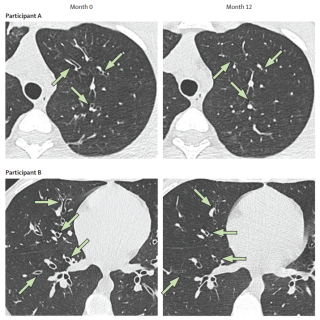
Reversal of bronchial dilatations in adolescents with cystic fibrosis treated with CFTR modulators
“Effect of elexacaftor–tezacaftor–ivacaftor on bronchial dilatations in adolescents with cystic fibrosis: a multicentre prospective observational study” - The Lancet Respiratory Medicine, 2026 Jan.
Researchers involved in the MODUL-CF study group report new insights into the impact of CFTR modulator therapy on lung structural damage in adolescents with cystic fibrosis. In a multicentre prospective observational study recently published in The Lancet Respiratory Medicine, Isabelle Sermet-Gaudelus (INEM team leader) and colleagues investigated the effect of the triple CFTR modulator therapy elexacaftor–tezacaftor–ivacaftor (ETI) on the progression of cystic fibrosis lung disease.
Conducted across 33 paediatric cystic fibrosis reference centres in France, this study followed 320 adolescents aged 12–18 years who initiated ETI as part of routine care. Using low-dose chest computed tomography (CT) as the primary outcome measure, the authors assessed whether restoration of CFTR function could modify the natural history of lung structural abnormalities, in particular bronchial dilatations.
After one year of ETI treatment, the study shows marked and sustained improvements in lung function, nutritional status, quality of life and inflammatory biomarkers. Importantly, chest CT analyses revealed significant reductions in mucus plugging, bronchial wall thickening and bronchial dilatations. In a substantial proportion of participants, severely or moderately dilated bronchi partially reverted towards less advanced or even normal dimensions. These structural improvements were closely correlated with a decrease in airway inflammation, as assessed by pro-inflammatory biomarkers in sputum.
By demonstrating that bronchial dilatations can regress in adolescents treated with ETI, this work challenges the long-held view that such structural lung damage is irreversible in cystic fibrosis. Beyond its immediate clinical implications, the study provides important insight into how CFTR restoration can alter the trajectory of cystic fibrosis lung disease and supports the potential benefit of early initiation of highly effective CFTR modulator therapies.