New publication from Coureuil/Jamet team in Nature Communications
Neisseria meningitidis filamentous phage MDA promotes colonisation by selecting hyperadhesive pili variants
Neisseria meningitidis is a strictly human bacterium that usually colonises the nasopharynx asymptomatically but can, in some cases, cause severe invasive diseases such as septicaemia and meningitis. Among the factors associated with meningococcal virulence, filamentous bacteriophages have emerged as important modulators of bacterial fitness and host colonisation.
In a study recently published in Nature Communications, the Filamentous Phage research group, led by Emmanuelle Bille within the Host-Pathogen Integrative Biology laboratory directed by Mathieu Coureuil and Anne Jamet, reveal how the filamentous phage MDAΦ promotes meningococcal colonisation by selectively targeting and amplifying the most adhesive bacterial variants.
Filamentous phages are non-lytic viruses that establish long-term associations with their bacterial hosts. In N. meningitidis, the MDA phage has previously been linked to enhanced biofilm formation and increased invasiveness. However, how this phage interacts with the bacterial surface and influences population dynamics remained poorly understood.
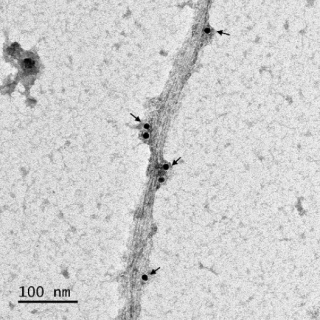
In this work, Clémence Mouville, first author of the study (recent PhD graduate, now postdoctoral researcher in structural biology in Rémi Fronzes’ laboratory in Bordeaux), investigated the relationship between MDAΦ infection and type IV pili, key surface filaments required for meningococcal adhesion to human cells. Contrary to the classical model established for other filamentous phages, the authors show that MDAΦ does not bind exclusively to the pilus tip but instead associates along the entire length of the pilus fibre. Phage entry requires functional, retractile pili but is independent of several pilus tip-associated proteins.
Strikingly, the study reveals that MDAΦ preferentially infects bacteria expressing positively charged variants of the major pilin PilE, which arise through antigenic variation. These same PilE variants confer increased adhesion to human cells, indicating that the phage selectively targets hyperadhesive bacteria. Consistent with this observation, the authors show that the major phage coat protein is negatively charged, suggesting that electrostatic interactions contribute to phage–pilus binding.
Finally, the study demonstrates that adhesion to human cells alone is sufficient to enrich the phage-positive bacterial population, revealing a dual selection process in which both host interaction and phage infection favour the same highly adhesive variants.

Together, this work uncovers a novel mechanism by which a filamentous phage can drive bacterial colonisation and potentially virulence, by selectively amplifying hyperadhesive meningococcal variants. It establishes a direct link between phage biology, antigenic variation of type IV pili and the early steps of Neisseria meningitidis colonisation.
🔗 Click here to access the article
Images credits: Mouville et al. Nature communication (2026), doi: 10.1038/s41467-025-67441-w