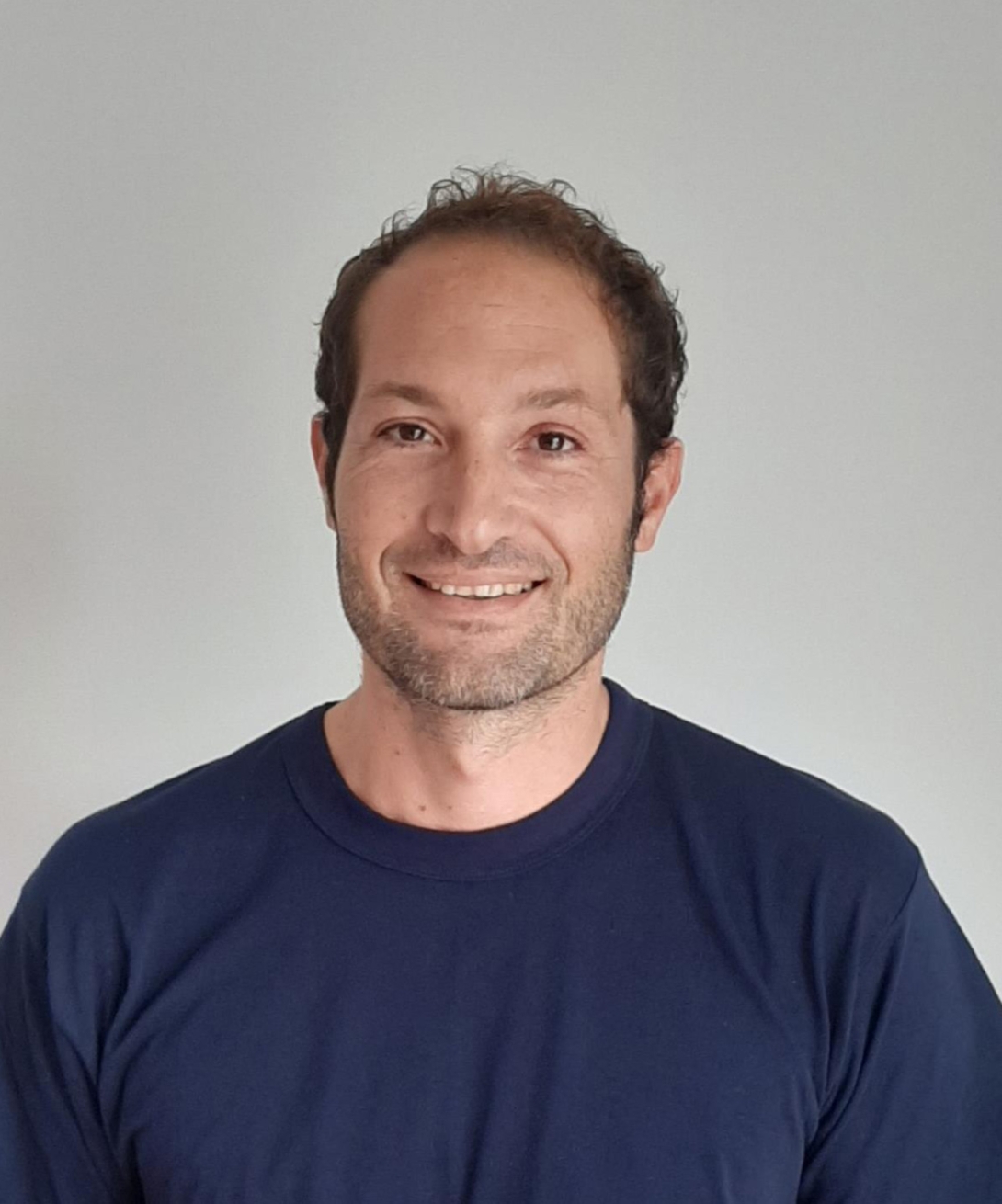
Stéphane Vassilopoulos
Seminar topic - Clathrin kaleidoscope: Structural diversity and its impact on neuromuscular diseases
Clathrin is best known for its role in endocytosis, but emerging evidence reveals that it forms structurally diverse assemblies with specialized functions across cell types. In this talk, I will describe how clathrin organizes into distinct architectures at the plasma membrane, ranging from coated pits to flat plaques, and how this diversity contributes to neuromuscular and neuronal physiology.
Using platinum replica electron microscopy and correlative super-resolution imaging, we show that clathrin plaque formation in skeletal muscle is developmentally regulated by alternative splicing of clathrin, which alters lattice curvature and mechanical properties. Perturbing this splicing event disrupts muscle function in vivo and is relevant to myotonic dystrophy.
We further demonstrate that clathrin plaques act as mechanosensitive platforms at costameres, integrating actin dynamics, dynamin 2 (DNM2), and integrin signaling to control YAP/TAZ mechanotransduction. Pathogenic DNM2 mutations associated with centronuclear myopathy drive aberrant nuclear YAP/TAZ signaling in patient samples and mouse models, a defect that can be rescued by allele-specific DNM2 silencing.
Finally, I will present new evidence for a specialized clathrin-based endocytic architecture at the axon initial segment, embedded within the spectrin/actin scaffold and dynamically regulated by neuronal activity. Together, these findings redefine clathrin as a multifunctional structural and mechanosensitive scaffold with direct relevance to several neuromuscular diseases.
Stéphane Vassilopoulos trained initially in physics and chemistry at the Université Joseph-Fourier (Grenoble), before turning to cell biology. He obtained his PhD in cellular and molecular biology in 2006 under the supervision of Isabelle Marty (CEA Grenoble), where he investigated the molecular mechanisms governing excitation–contraction coupling in skeletal muscle.
As an FRM postdoctoral fellow in the laboratory of Frances Brodsky at the University of California, San Francisco (UCSF), he focused on clathrin biology, identifying a specialized role for the clathrin heavy chain isoform CHC22 in glucose homeostasis, GLUT4 trafficking, and muscle regeneration. This work contributed to redefining clathrin as a functionally diversified scaffold beyond canonical endocytosis.
In 2010, he was recruited as a permanent INSERM investigator at the Institute of Myology (UMRS 974, INSERM–Sorbonne Université, Paris) and was promoted to Directeur de Recherche (DR2) in 2021. His laboratory investigates the ultrastructural and mechanobiological organization of membrane-cytoskeleton interfaces in striated muscle and neurons.
In skeletal muscle, his group studies adhesion and force transmission at costameres, caveolae-dependent biogenesis and remodeling of T-tubules, coordination between actin, intermediate filaments, and membrane scaffolds, and vesicular trafficking between these compartments, including clathrin-mediated pathways.
More recently, his research has expanded to neurons, with a particular focus on the axon initial segment (AIS). His team characterized stable, spatially confined clathrin assemblies at the AIS and their remodeling in response to activity-dependent plasticity. These studies reveal how membrane trafficking machinery integrates with the specialized cytoskeletal architecture of the AIS to regulate neuronal polarity and excitability.
Methodologically, his laboratory combines molecular and cellular biology, mechanobiology, advanced electron microscopy, and correlative super-resolution imaging to link nanoscale architecture to function. A central objective is to determine how genetic mutations or altered mechanical environments perturb membrane organization and trafficking in neuromuscular diseases, including centronuclear myopathy, myotonic dystrophy, and selected limb-girdle muscular dystrophies.
Mark your calendars and make sure to join!
Please note that photography during seminars is unauthorized. We kindly ask you to respect this policy to maintain the confidentiality and intellectual property rights of the speakers and their work.