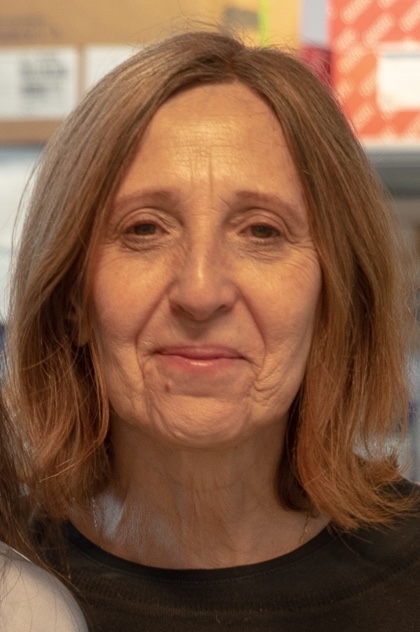
Mercedes Ricote
Seminar topic: Mother´s mil drives maturation of heart metabolism
Mercedes Ricote has a degree in Biology from the Complutense University of Madrid (UCM) and obtained her PhD in Biology from the UCM in 1994. After defending her doctoral thesis, she joined the laboratory of Dr. CK Glass at the University of California, San Diego (California, USA), where she played a key role in the seminal discovery that the nuclear receptor PPAR and its ligands inhibited macrophage activation. In 2004 she joined the Spanish National Centre for Cardiovascular Research (CNIC, Madrid) as group leader, where her research focused on the study of the role of metabolism and macrophages in cardiac homeostasis and disease. In 2023, she moved to the National Centre for Biotechnology (CNB-CSIC), Madrid.
Her current research is dedicated to unravelling the mechanisms by which nuclear receptors regulate metabolism in both normal and pathological conditions. In addition, she has recently initiated a new research direction examining the transmission of signals between mothers and neonates and their impact on the control of energy homeostasis.