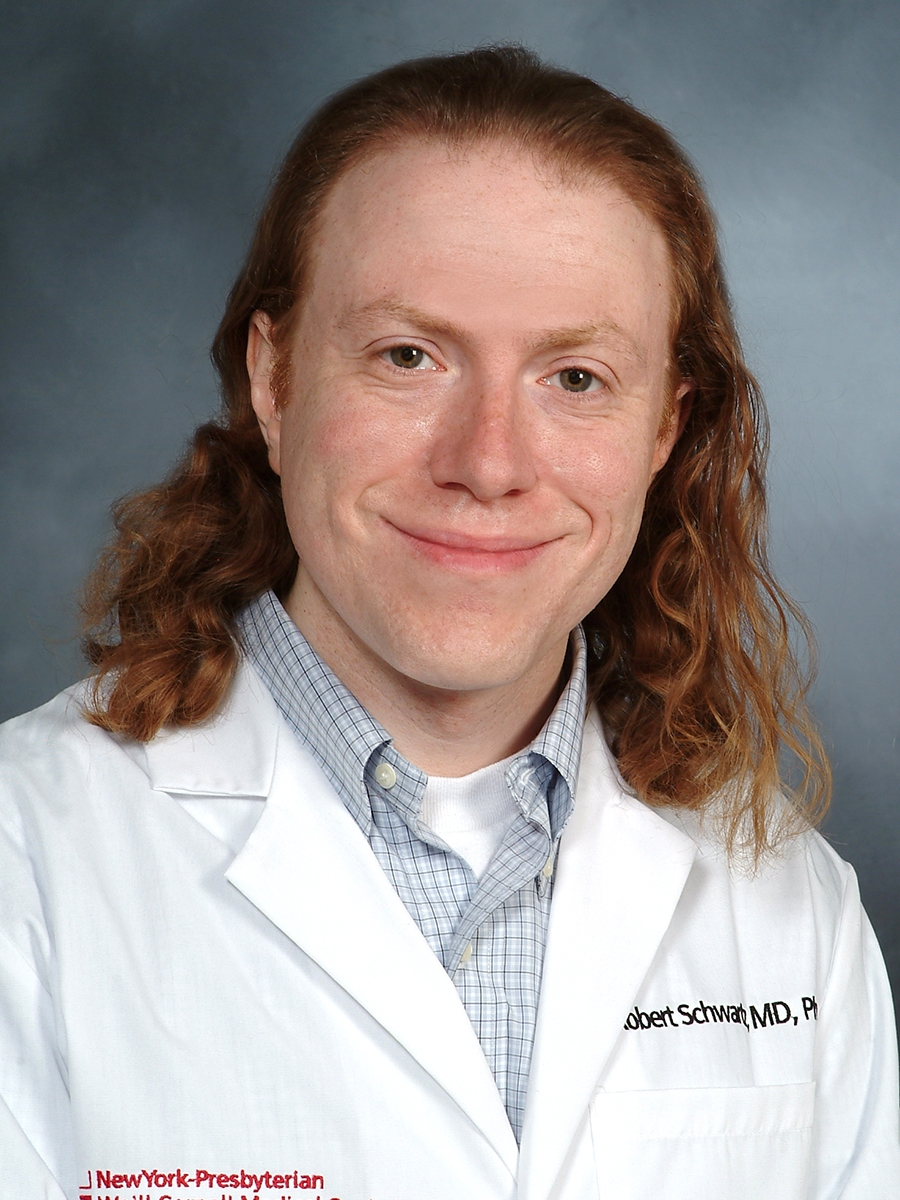
Robert E. Schwartz
Seminar topic: Vascular Identity, Stromal Diversity, and the Challenge of Building a Bioartificial Liver
After completing my B.E. in Chemical Engineering at The Cooper Union for the Advancement of Science and Art in 1999, I pursued combined M.D. and Ph.D. degrees in Biomedical Engineering at the University of Minnesota, where I trained with Dr. Catherine Verfaillie and Dr. Wei Shou Hu on the derivation of stem cell-derived hepatocytes and in vitro liver model systems, graduating in 2006. I completed my residency in Internal Medicine at Barnes-Jewish Hospital at Washington University in St. Louis, followed by fellowship training in Gastroenterology and Hepatology at Brigham and Women's Hospital and Harvard Medical School. I then undertook postdoctoral research at the Massachusetts Institute of Technology in the laboratory of Dr. Sangeeta Bhatia, where I continued to develop stem cell-derived hepatocyte platforms for the study of human liver disease. I joined Weill Cornell Medicine as an Assistant Professor of Medicine in 2014 and was promoted through the ranks, becoming Professor of Medicine with Tenure in November 2025. I also hold appointments as Professor of Physiology, Biophysics, and Systems Biology at Weill Cornell Medicine and Professor of Biomedical Engineering (by courtesy) at Cornell University, and serve as Director of Translational Medicine in the Division of Gastroenterology.
My laboratory focuses on leveraging stem cell biology, bioengineered tissue platforms, and spatial omics technologies to model human liver diseases — including viral hepatitis, liver fibrosis, biliary disease, and liver cancer — with the goal of developing novel therapies. I have been recognized with the ASCI Young Physician-Scientist Award (2015), the Irma Hirschl Trust Research Award (2018), and election to the American Society of Clinical Investigation (2022), among other honors.
Please note that photography during seminars is unauthorized. We kindly ask you to respect this policy to maintain the confidentiality and intellectual property rights of the speakers and their work.